Genesis 4
Uses your browser's built-in voice
The Beginning of Religion
One of the things we see in Genesis 4 is the very first glimpses of religion in this world. It is very common that we often despise the religion we find in the Old Testament as something archaic and long since past, but this was never how God intended for us to read these accounts. God has always intended that we look upon the spirit of religion in all such people and see instruction towards true religion.
What is profound in this chapter here is how we see religion established since the foundation of the world. This is a very significant thing, because it shows us that the religion of God exists since the beginning of all creation, and that true religion is as much a part of the foundation of creation as anything else.
One of the things that God intends for us to understand about Christ is how He established Him before the foundation of the world. Not that Christ was created then, but that He was established then, taken hold of.
“The LORD possessed me at the beginning of his work,
the first of his acts of old.
Ages ago I was set up, at the first,
before the beginning of the earth.”
(Prov 8:22-23)
What we see in Abel is this spirit of true religion towards God. This spirit is faith. Faith is this true acknowledgment of God’s authority and respect to Him as our Creator. It is the flame that purifies and burns in true godliness and holiness.
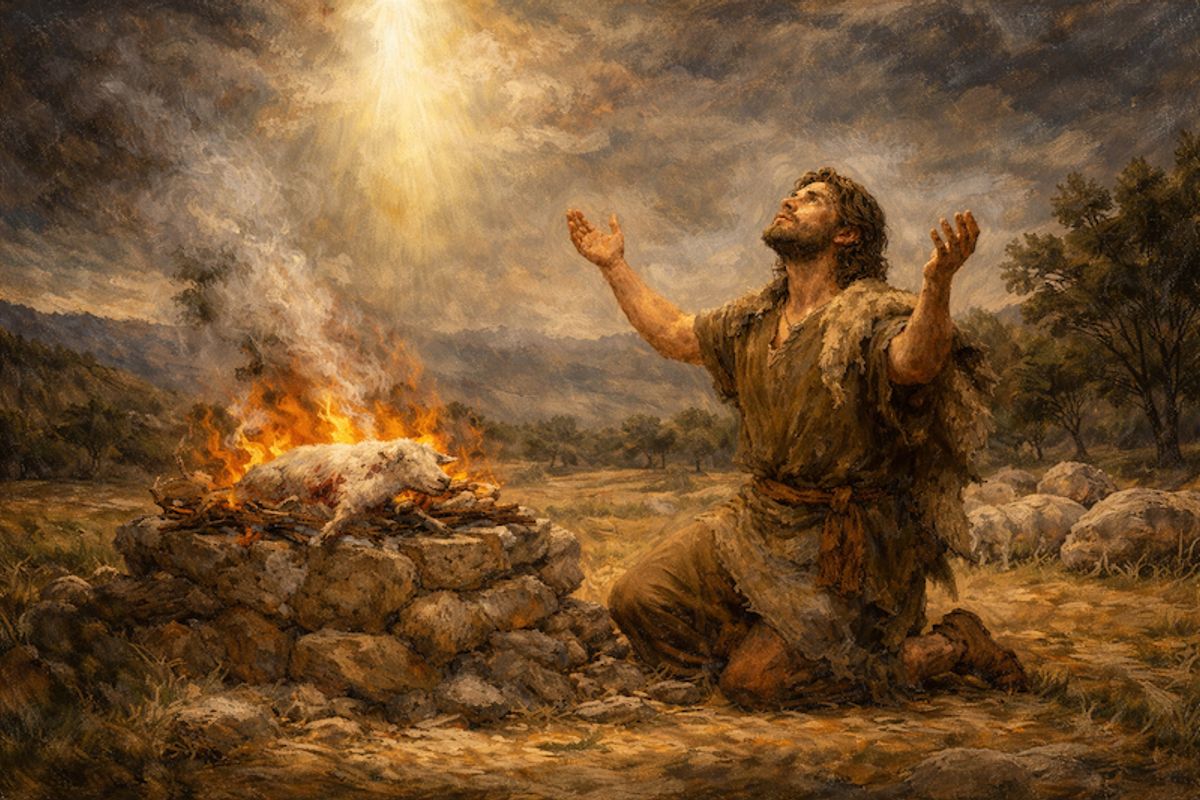
If we only look at the physical, we will miss the spiritual. All throughout Scripture we see this great spirit of religion. Abel was bringing before God a sacrifice of an animal, but in that sacrifice was this deep worship of God. This true submission and holy humility. The physical thing presented was a way to express this to God. It was a physical sacrifice in worship, echoing the spiritual sacrifice within (Rom 12:1-2).
Though we do not sacrifice animals in our worship of God, we should not see even that as strange, when we look at how this was a true regard of God, an offering before Him the things of one’s own possessions. We see the spiritual religion of God, running here in Abel, all the way to today.
The great reason that God accepted Abel and not Cain was because Cain’s offering didn’t have this spirit of true worship in it, and Abel’s did.
Over and over this is what the Lord labored to teach Israel, that mere sacrifices mean nothing if they do not come from this spiritual bowing down and worship of God (Isaiah 1). This is what God is pointing at with faith. Faith is true religion within. It is a spiritual understanding and sight of the things of God, which flows into true religion.
The physical acts of many of the Jewish people were like Cain’s offering. It had no real godliness or holiness within (again, Isaiah 1). And God worked to show the people that true religion is about this godliness and righteousness within. Though people expressed this through the physical acts, it was never merely the physical acts themselves.
Faith
One of our great needs in the church is to look again at the things of faith and true religion, and humble ourselves to be taught by God about them.
It is very common that many believe and are taught that faith is opposite to religion, when faith is the spirit of true religion. We are quick to think we understand a greater wisdom because we do not keep these external sacrifices, and yet we so often show that we aren’t really any better than Cain in our religion. This is because we do not humble ourselves to understand Abel’s example spiritually, nor take warning from what God spoke to Cain.
Abel was accepted by God because of his religion, his righteous regard of God. This is what faith is. And though we do not have external sacrifices, we can busy ourselves with much of the same vanity as many of the Jewish people did. Our activity is no different, it doesn’t matter what form it takes. If our religion is not of this substance of spiritual godliness and righteousness, then our religion is also rejected by God.
God shows us that the sacrifices of Israel were an expression of the very same spiritual error and sin that happens within many. Where we can lack spiritual religion in the heart.
The issue of faith in the Bible is God continually trying to show mankind about this very issue of the heart.
If we look at what Paul speaks about in Romans 2, we can see this example in circumcision:
“For circumcision indeed is of value if you obey the law, but if you break the law, your circumcision becomes uncircumcision… For no one is a Jew who is merely one outwardly, nor is circumcision outward and physical. But a Jew is one inwardly, and circumcision is a matter of the heart, by the Spirit, not by the letter…” (Rom 2:25, 28-29)
Circumcision could just be a physical act, and it meant nothing if it wasn’t done from a spiritual religion within. Whereas the point of what we see in Abel, and later in Abraham, are physical things done from this spiritual religion within, which is what faith is.
What often deceives Christians is that they quickly think they understand faith merely because they do not lean on outward physical acts in their religion, but they do not see how legitimate these physical acts were when they were done from this spiritual faith in people.
If we miss this right understanding of faith then we are in danger of running into the very same vanity that we act as if we are above. We just cannot see it because it is carried out in a different way.
Though our vanity is not carried out in physical sacrifices and external acts, still our vanity can come from the same spirit, where we are busy with something or other in the name of religion all while neglecting the entire purpose of God’s religion, to bring us into a spiritual and full godliness and righteousness of life. To bring us into a spiritual knowledge of God, and into doing His will.
What we see in Cain is the sin of the heart that was rejecting this purpose of God, which Abel was walking in it. Though their external sacrifices could have been the same in quantity, God rejected Cain’s because it was not spiritually right, it did not come from godliness and holiness within.
“What to me is the multitude of your sacrifices?
says the LORD;
I have had enough of burnt offerings of rams
and the fat of well-fed beasts;
I do not delight in the blood of bulls,
or of lambs, or of goats…
Wash yourselves; make yourselves clean;
remove the evil of your deeds from before my eyes;
cease to do evil,
learn to do good;
seek justice,
correct oppression;
bring justice to the fatherless,
plead the widow’s cause.”
(Isaiah 1:11,16-17)
“If you do well, will you not be accepted?” (Gen 4:7)
Within these first displays of religion, we see God speak a pure instruction to Cain that is the very foundation of all true religion and righteousness—“If you do well, will you not be accepted?” (v7)
God rejected Cain’s offering for a legitimate reason. He wasn’t being picky or demanding, He saw how Cain’s offering lacked a real goodness in it. And along with this, God showed Cain the way to go forward. He didn’t leave Cain upset and rejected, but spoke wisdom to him, how to find his way.
These same issues play out in our lives today. It is very common that whenever we suffer or whenever God begins to speak to us about living righteously, we quickly become despondent and bitter with God, as if He is unreasonable and legalistic, when the reality is that what we are “offering up” in our lives is not actually as good as we would like to think.
One of the central problems with sin is that we can expect to be accepted without truly doing what is good. Mankind as a whole can be very busy with our desires and plans, all the while we expect “good” to be an automatic outcome, though we don’t actively seek good.
Mankind neglects doing good. We may not actively seek evil, but neither do we make our main concern doing what is truly good in and of itself. We expect that our ways are not that bad, but we cannot say we are “guilty” of laboring day and night purely for goodness and godliness.
“All have turned aside; together they have become worthless; no one does good, not even one.” (Romans 3:12)
Our attitude is often like Cain’s—we resent God’s disapproval and call to walk in what is truly good, and instead want to be accepted without having done so. We do not see that God rejects our ways not because He is just labeling all people as “evil”, but because our ways truly lack the substance of real goodness, wisdom, and godliness.
And just as God spoke to Cain, so He speaks to every single person in this world, He speaks the very same religion that He spoke at the beginning of mankind—to walk in what is truly good, and then we will be accepted.
This is very important to talk about today because many in the church reject this simple truth in the name of “grace”. They imagine that grace means God removes the call to do well, and instantly grants them acceptance with God without doing the righteous works of God; and many are taught that this is what grace means! Yet this view is a rejection of the very foundation of true religion.
Like Cain, we often resent this call of God to do well. We think God’s call is some impossible perfectionism that could never be obtained (is this not even declared from many pulpits) and yet we do not see that everything God is directing us towards is correction for real lack within us. A real foolishness, sinfulness, and blindness. And all of this culminates in making us empty of any real substance/goodness.
On a hot day when we are very thirsty we wouldn’t be pleased with an empty well and going without water. If we were hungry, we wouldn’t be satisfied if we never found food to eat. There’s a real substance in these things. And this is no different when it comes to the quality of our own spirits. They are either real bread and water, or they aren’t. Cain’s offering didn’t have real substance within it—this lack was the issue surrounding faith. He didn’t offer up a real substance of righteousness and godliness within his offering. And for all of us, this is the judgment on the quality of our persons and lives. They can be found greatly lacking in righteousness and godliness.
This righteousness and godliness is the only real substance. It is certainly not the case that any “righteousness” or “godliness” is substance, but only what is truly pure and light: "For the fruit of light is found in all that is good and right and true.” (Ephesians 5:9) We’ve seen in many examples how much “religion” can lack this true light, it’s exactly what we see here in Cain, and what we see in Isaiah 1, and in the Pharisees. And it is also a great deal of what we see in the church today.
Instead of light, many people’s religion becomes darkness (Matthew 6:23). And this is WHY God corrects us. We have to allow God into our religion to correct us when we are not walking in right faith.
One of the great darknesses in the church today is this lie of acceptance with God without doing the works of the Light. Instead of taking the path of truly turning into doing what is good, many instead imagine they are accepted with God without doing so.
The heart that such beliefs and acceptance of them stems from is a heart that is upset with God and sees His ways as unreasonable and impossible. It doesn’t see that God’s call to doing what is righteous is the way of life and is good. That it is the way to escape the sin that is lurking and seeking to destroy us. And such people become sullen with God and don’t really consider why God is saying what He is saying. They get upset with God any time they are made to feel any responsibility to do real goodness, and they see God as bitter and oppressive any time He would correct them. Whenever God disciplines them, they cannot see that it is God’s rebuke of them, not in hatred, but to save them from their presumption. And they cannot see that because they are so convinced of God’s harshness, that this is why they believe in such ideas of “grace”. It feels like a balm to the anger in their hearts at the call to true accountability. They feel very afraid of this weight, like it would crush them, and they don’t see that God’s words to Cain here is the actual balm. To shoulder our responsibility rightly each day IS the path forward for us.
To see that God has very great reasons for all He says to us. And the more we walk with God in His ways, the more we will see just how reasonable and needful God’s commandments really are.
The horrible truth is that many of our hearts are just like Cain’s. We resent God’s rebuke and call to walk in true goodness. We resent the very simple truth that we are not accepted because we do not do well. That it is a reasonable correction. And instead of facing it, we try to choose a different path. We may not go out and murder our brother, but our hearts will fill with one darkness or another.
The fruit of these sinful beliefs in the church has been a great loss of real righteousness, godliness, and wisdom in the church. Oh sure, there is much activity going on in God’s name, but the substance in what so many do is deeply lacking. We do not see that the very means of substance comes from following Jesus in this path, and that we can only have this light and salt in us if we do so.
Choice
Something worth noting as well in this chapter is that Cain was given a choice. It’s clear by the way that God spoke to him that the LORD clearly meant that Cain could choose to do what was right or could continue down the path of sin.
This is an important clarification because we often suppress the truth of choice. Sometimes we have the mindset that we are too dominated by “that’s just how I am, can’t help it”, or we might take victimization in a way that minimizes our own choices in life. Additionally, it is very common theology in the church that a person is just so “lost” to sin that they are incapable of choice (called total depravity). Again, it is easy to miss how this sort of thinking is actually bubbling up from our own sinfulness, much the same as a person desiring to not be held accountable for their choices by hiding behind some shield of victimhood. Yet a very simple truth we see here is how choice was offered to Cain.
We may struggle to understand this within the great web of our own understanding of God’s Word and our theology, but we must be careful to not suppress such truths. The desire to deny accountability for the choices we make only comes from sin in us. And we can be just as sinful and twisted as any “worldly” person if we seek to deny accountability for our choices in using some idea of doctrine, just as any person in the world would use “personality” or victimhood as a shield. It’s very important that we see just how sinful a heart this is, and how worldly it is!
The work of God in us is never to get us to deny mankind’s accountability for our choices, but to get us to see all the choices we make. It is very common that we do not really see the choices we are making because we are on such “autopilot” with our desires. Yet God labors to show us just how much of our lives are rooted in our own choices. Not the cruel judgments people often make against those poor and in need in the world—as if they could just magically make their situations different with enough effort—how ironic that the people who often deny their accountability the most are also those who make such cruel oversimplifications of others… But for all of us, the Lord labors to show us that we are all sowing many things in our lives. Everything we choose, think on, pursue, say, and act upon are things being sown into our lives and the world around us, for better or worse.
One of the greatest characteristics of sin is seen in any effort we make to put off our own accountability for the choices we make, or are called to make. We hate the way God makes us responsible to choose what is good, and to hold us accountable for any place where we don’t.
One clarification: What is sad is that accountability is often put in the wrong place! People are often pressured to take accountability in the very areas they aren’t actually accountable for. For example, in an abusive or toxic situation, pressuring the person harmed by another to take some kind of “responsibility” in the situation, when there’s no accountability for them to take—this only puts on them the responsibility of the other person. But rather, the issue is where we do not bear our responsibility in the areas that are truly ours (outside of such situations).
Godlessness
Something we might not notice outright in the account of Cain and his descendents is the loss of the reality of God in their lives.
Matthew Henry summarizes this issue well, saying, “Worldly things are the only things that carnal, wicked people set their hearts upon and are most clever and industrious about. So it was with this race of Cain. Here was a father of shepherds, and a father of musicians, but not a father of the faithful. Here is one to teach about brass and iron, but none to teach the good knowledge of the Lord: here are devices how to be rich, and how to be mighty, and how to be merry; but nothing of God, of his fear and service.”
One of the challenges we face in the world is the constant false reality of a world without God, and with this, a great lack of the knowledge of God, awareness of God, and regard to Him.
Godlessness is the summary of this spiritual issue. And we see the godlessness in Cain continue in his life and that of his descendants. They begin to live out an existence that is separated from God.
What faith does in godliness is work a “seeing” of the invisible God, it works a respect and regard to the God of all creation, and a life lived in the Light of the reality of God. One part of faith is bringing us back to the one true God, and to godliness. Another is bringing us out of all unrighteousness into all goodness. “For the wrath of God is revealed from heaven against all ungodliness and unrighteousness of men…” (Rom 1:18)
One challenge we can face in the midst of godlessness, is those who profess to regard God and yet are still filled with a spirit of godlessness and unrighteousness. This is very much what you find in Christ’s day among the Pharisees. Faith discerns this false godliness for what it is, seeing its fruit and works. Rather, faith is a true and living knowledge of God, and a humble and pure regard of the Lord. It steps past all godlessness, whether it be the godlessness in the world, like Cain’s descendants, who gave no mind to God, or it is stepping past the false gods of the world, or it is stepping past the idols in the very church carried out in God’s name… God’s call to godliness is to learn a true and humble knowledge of the God of heaven and earth and to treat Him with reverence and respect.
“ …And you have praised the gods of silver and gold, of bronze, iron, wood, and stone, which do not see or hear or know, but the God in whose hand is your breath, and whose are all your ways, you have not honored.” (Daniel 5:23)
We live in a world that is constantly turning up false realities of godlessness to us. It’s in all our movies and shows, books, and simply the way so many live. And this false reality is a continual attack against faith in the truth. The great sin and failing of Cain wasn’t just the murder of his brother, but we see the very godlessness playing out in his life that God knew was in his heart, even as he stood face to face with the living God! His godlessness poisoned his descendants after him, and eroded the knowledge of God among them.
The Sins of Lamech
Lamech is shown to walk in a couple of sins, God records these so that we can see the sinfulness and godlessness increasing in the dependents of Cain, and what it looked like.
For one, he is recorded as the first person to take a second wife, sinning against the love and equality of women. One of the great sins that always exists among sinful mankind is the loss of the equality and dignity of women. Wherever men grow in sin and darkness one of their greatest fruits will always be in how they treat their first neighbor, woman. The bitter selfishness and pride, the constant desire to rule over, these are evident signs of darkness and sin in a person.
The second thing we see here is the presumption of Lamech. Matthew Henry says this: “Lamech had enemies, whom he had provoked. He draws a comparison betwixt himself and his ancestor Cain; and flatters himself that he is much less criminal. He seems to abuse the patience of God in sparing Cain, into an encouragement to expect that he may sin unpunished.”
Presumption is one of the common characteristics in the attitude of sinful people. They spread themselves out, selfishly indulge in whatever they please, and then seek to deny the truth about their sins, and being held accountable for them.
Part of this presumption is a twisting of mercy, forgiveness, and grace. No longer are these things for repentance and to walk in what is good after having done wrong, but these are twisted simply into denying the judgments of God upon them.
“Or do you presume on the riches of his kindness and forbearance and patience, not knowing that God’s kindness is meant to lead you to repentance?” (Rom 2:4)
It is the sad case today that much of what the church takes grace to mean is nothing more than presumption. It is a denial of God’s judgment and truth over them, of being held accountable, and saying that this is merciful!
This desire to put off our own personal responsibility and to not be held accountable for what we choose in this life is the very core of a sinful heart, not a godly one.
True grace is rooted in God’s kindness in leading us to repentance. To bear up under our responsibility, to: “Wash yourselves; make yourselves clean; remove the evil of your deeds from before my eyes; cease to do evil, learn to do good; seek justice, correct oppression; bring justice to the fatherless, plead the widow’s cause.” (Isaiah 1:16-17) To come into a true goodness and godliness of life, whereas before we didn’t truly pay the cost to walk in these things.
Presumption is always an abuse of kindness. And rather than this being something “new”, we see the spirit of this sin at the very beginning of the world. And such a sinful frame of mind is no different today.
It is always rooted in how we seek to take hold of God’s mercy and kindness (and the kindness of people). This is very important to discern because we often think that a mere grasping onto the grace of God is all that matters, but it matters how we seek to take hold of God’s grace, and what we believe God’s grace to mean. The sinful heart in us can always aim to twist God’s mercy and grace, just as we see in Lamech. If we allow our sinful minds to twist God’s grace into a removal of God’s judgment and our personal responsibility in life, then we seek to take hold of God’s kindness with a sinful presumption, rather than in a true righteousness.
Many people today talk of rejoicing in God, when they have taken hold of God with this sinful heart. They boast as if God can no longer judge them, nor the light search out their sins. They fail to see that they rejoice in sin, and not in true godliness.
There is nothing more sinful and full of self love than presumption such as this. It denies fairness and justice to everyone else all in order to give favoritism to ourselves. And this is the heart of sinful man, a great selfish favoritism for ourselves, whereas God shows us the correction to sin is to love our neighbor as ourselves—getting at the imbalance within us.
Such favoritism is what many imagine the grace of God to mean. This sort of self love would rob all people around them of truth, fairness, and justice, all to suit themselves, and to go without accountability. Such an attitude murders love, justice, truth, and the good of their neighbor.
Lamech had murdered a man, and yet he would have no justice done for this man for his life being lost, no account given. This is the attitude in sinful mankind. How many times do people stand up in court and vehemently labor to be acquitted, with no regard to the crimes they have committed or the needs of their neighbor?
How sad that this same frame of spirit exists in the church! This same denial and defense of self. So many seek to hide behind the shield of lies and suppress the truth, when the true mark of godliness is a holding of personal accountability.
The whole world can’t face themselves for what they really are. The Christian is supposed to be someone who truly faces the truth. But when our attitude is nothing more than the same violent fist of self will, and the same denial of reality and truth of our neighbor; then the same presumption upon God’s mercy that we won’t be held accountable… Are we really of the spirit of Abel, or are we of the spirit of Cain?
The sinful heart always makes its refuge in lies and denying reality, a godly heart listens and faces reality for what it actually is. It doesn’t believe lies from other people about them (an important note to make here), but it also doesn’t walk in the same cowardice as the rest of the world, hiding behind the shield of self love and unreality to suit themselves.
So much of God’s grace has been twisted into a wicked favoritism for Christians, and this is a great heresy. As if the great “reward” of being a Christian is not being held to account for how we live, rather than being people who learn to bear up in accountability for what is truly godly and good.
Much of this comes from a misunderstanding of what faith is—faith is two parts, not one. Faith is often only taken as trusting in God, but the second part is trusting in God as we live righteously.
We often think of accounts like Daniel trusting in God in the face of the lions den, but miss how his faith was rooted in God in his innocence:
“My God sent his angel and shut the lions’ mouths, and they have not harmed me, because I was found blameless before him; and also before you, O king, I have done no harm.” (Daniel 6:22)
When we see this then we understand God rightly, and not in a presumption. We understand, like in the case of the minas in Luke 19:11-27 that God’s grace to us is an investment whereby He expects the return and profit of righteousness in us. We see at the end of this parable that the person who does not make this return to God has even that original investment taken away from him.